Search This Blog

Sunday, 6 April 2014

Starred Up


Genre: Prison Drama
Directed: David McKenzie
Starring: Jack O'Connell, Ben Mendelssohn, Rupert Fiend and Sam Spruell
Running: 106 Minutes 

Jack O'Connell must have done something extraordinary in the audition to play along side the eccentric Australian Ben Mendelssohn. Playing second fiddle to the former skins star, both actors help bring this modernistic prison drama to life, owing much dept to predecessors such as Scum, A Prophet and Bronson.

In his first "major" leading role, the appearance of Jack O'Connell has been a long time coming. Renowned for playing Cook from teen drama Skins, Jack has made appearances in This is England and 300 Rise of an Empire of late. Director David McKenzie has managed to give Jack a role that sees him come out of his skin in what is surely the performance of his early movie career.

The opening scene is an invitation into the prison. Smartly shot, we follow Eric (O'Connell) as he is greeted with unopened arms into the hefty security of an adult prison. Unsettled and troubled in the adolescent prison he came from, Governor Hayes (Sam Spruell) is adamant to keep Eric maintained. Eric is aware of his surroundings, revealing his survival instincts in the first five minutes of its moody opening; melting a blade onto a toothbrush, Eric's fighting mentality is what lead him here in the first place and what will surely defy his future through-out the majority of this bit-part story. Cliched as far as prison movies go, but the twist is Ben Mendelssohn as Eric's intimating father and prison dictator. The relationship between father and son is heated as both are content in maintaining their own vigorous morals while a backdrop of child abuse gives us a darker insight into the current state of Eric and his father. Neville is aware of Eric's troubled youth and decides to guide him following a word of advice from prison kingpin Spencer (Peter Ferinando) who is beginning to lose patience with the young brawler,  leading to a difficult decision that puts father and son at the forefront.

David McKenzie's film plays with various sequences of brutality and verbal crudeness, so much so that you start to wonder just where the film intends to go. The first half of the movie is busy introducing a lot of characters involved in Eric's bid to survive, but also balances a sense of humanity and dignity in Oliver (Robert Fiend); a prison Councillor who's cautious approach is of like nothing Jack has experienced. Oliver opens new doors for potential rehabilitation in terms of Eric's anger issues but Eric is tortured by the corruptness in the prison, as well as his own psychopathic mindset.

Starred Up does a terrific job in locking you up from the beginning. Every punch, every scream every conversation is constructed to involve you. The cinematography is sharp and claustrophobic which allow you too feel trapped with these caged animals. It's drama is real and at times heartfelt considering the circumstance. There are no heroes here and deep down director David McKenzie knows they are placed in a situation where pity and remorse is not an option. It is the cliched tale of survival of the fittest. Jack O'Connell's character is clearly inherited from Ray Winston's Scum and done so to perfection. O'Connell's anger is felt so much that he almost leaps off the screen. He plays the role of a demented character wonderfully. The flawless performance from Jack O'Connell helps to distract us from the fact this movie lacked a real sense of direction form the beginning,  giving us a violent ending with little or no clarification or aftermath regarding our underdeveloped characters.

As a movie there is nothing here you haven't seen already. A prison movie is a safe bet and Starred Up is just another one of those. Its riveting considering the leading star while Ben Mendelssohn has proved he can do no wrong. It's graphic, vulgar and painful in its brutality; and as a man, that is maybe all one needs, but if you are looking for a story with depth and character development, Starred Up provides the opposite.


Wednesday, 19 March 2014

Under the Skin


Genre: Horror/Thriller
Directed: Jonathan Glazer 
Starring: Scarlett Johansson 
Running: 108 minutes

As silly as it may sound, Jonathan Glazer's take on modern alien-ism is so realistic it is truly frightening. A horror movie it is not, a sci-fi is questionable also; let's just say Under the Skin is a bag of everything, including drama and sentiment from a female alien seeking humanity in oneself. Giving very little away in its advertisement, judging by its James Cameron style poster, the opening scene is one of true remembrance, even if there is very little to show. Jonathan Glazer makes an alien assumption and what we are about to follow through-out this 100 minute slideshow of fascinating images.

A machine is seen slowly making its way toward what we eventually make out to be a human like eyeball, constructing our female protagonist to be (Scarlett Johansson). From there we witness a compelling concept of the hunter and the hunted through an aliens-eye-view. Prowling the wet streets of Scotland with a motive that is never fully explained, Laura is on the look out for vulnerable men with no direction other than the dark depths of what appears to be a concept of alien abduction. The murky human world is what captivates this movie to its full realism as hidden cameras are used to show the mundane streets featuring pedestrians at their typical. A transit van supplied by a mysterious biker is used to distract Laura from her manifestation; unrecognisable beneath her 80s retro hairstyle, Laura routinely distracts men at their most isolated, inviting them back to her abandoned house where they will meet their demise, revealing the most fascinating image and the "horror" of the movie. However Under the Skin feels purposely divided into a movie of two very different chapters, one that reveals sentiment in Laura with a dramatic outlook on what happens when the tables are turned on our leading star. It goes on to focus on a clever concept, one of much relevance in today's society. For me, Jonathan Glazer kills the darkish mood of its first 45 minutes to give us a sense of humanity and sympathy but again going back to what the movie offered at the beginning, making for a fantastic intro, a strange and not too comfortable middle and a brilliant ending.

Scarlett Johansson does very little here, yet it is the performance of her career no doubt. As strange as that may sound, that is exactly it; her cold and calculated expressions, her movement and her overall commitment to a film revealing more nudity than we would have expected, she is dedicated to her robust character from the get-go. Scarlett showcases a method side to her acting that the blockbusters of the past have not aloud her to do. Her robotic persona is scary and seductive making Under the skin spine tingling at times, yet heartfelt for both herself and her victims - she leads the line in fantastic fashion in this very rare one-women-show.

The chilling soundtrack helps set the atmospheric tone this movie thrives off from the beginning. Scarlett's on screen presence creates something so unnerving, you could cut the cinematic atmosphere with a blunt knife. The oblivious folks appearing in the backdrop of midnight Scotland gives this movie a sense of realism, with its stalker concept being of much relevance. Jonathan Glazer sheds some light on just how the average male can be vulnerable in the dead of the night; one scene shows just how far Laura will go to lure a victim to a misty grave.

Those looking to enjoy a movie of dialog will be very disappointed. Under the skin is an artistic outlook of hunter seeking its prey using a plethora of images; featuring deserted highways, wet and windy pavements and grizzly houses, while the sci-fi also comes into play in Laura's lair. Unfortunately the same concept is used toward the middle of the movie and the end, substituting gritty streets for the country woods and more. I for one found the images fascinating and self-explanatory.

Very little can be said in regards to how the movie plays out, and some people may be disappointed in that sense. It is probably the most realistic take on alien-ism I have seen in modern film so far. However so realistic that it may prove boring for some, and virtually unexplained. I for one tend to keep an open mind, therefore enjoying this visionary bag of mixed treats from Jonathan Glazer.


Tuesday, 4 March 2014

Ride Along


Genre: Action/Comedy
Directed: Tim Story
Starring: Ice Cube & Kevin Hart
Running: 100 minutes 

The buddy cop genre has had some ups and downs in its time. The origins are however, worth remembering such as 48hrs, Lethal Weapon and Beverly Hills cop still holding up. Unfortunately the existence of such classics are often used to help revive such a genre resulting in many copycats; the dire and ultimately forgettable Cop Out (2010), the divided opinion of The other Guys (2010) and R.I.P.D of late (to name a few) have all proved unoriginal and most importantly, not funny. Ride Along falls into the same poison chalice.

Stuck with the same facial expression since Boys in the Hood, Ice Cube finds himself in position similar to Friday; shunned by Chris Tucker's comedic dose, Ice Cube's lack of personality gives way to Tucker's replacement, Kevin Hart.

Ben (Hart) is a part time boyfriend and full time video gamer. Destined to become a police officer, his national security job is a stepping stone to become the bad ass his brother in law defies him to become. Desperate to impress his mundane companion Angela (Tika Sumpter), Ben passes his exams. Behind Ben's obviously obnoxious personality is hard as rock, straight-outta Compton rouge officer James (Ice Cube) who showcases is gun skills upon the movies introduction. Like all buddy cop movies a hatred must exist and indeed one does. Ben plans to wed James's sister Angela, much to the disgust of James whose long term memory of a barbecue incident is the route to Ride-along’s typical chemistry of modern buddy cop humour. Hell bent on proving his courageousness, Ben is taken on a "ride-along" by James, resulting in a part-time comedy (thanks to Hart) but monotonous which is also thanks to Hart.

I would be lying if I told you that Ride-along offers nothing in its comedy, it does. Kevin Hart's miniature presence is somewhat memorable and really tries to give this nonsensical blockbuster a heartbeat (excuse the pun); re-enacting Denzel Washington's Oscar winning disintegration scene from Training Day in front of a biker gang, to the testing of various guns in a police gun range. However the drawn out perspective of Kevin Hart's height is used to the extreme, resulting in a comedy that takes a new direction in depending on "slapstick" over the witty dialog that maybe could have been used in replacement. Kevin Hart's attempt to become the next Eddie Murphy gets the best of him with his in your face dialog proving tiresome the longer the movie survives.

Other cast members include cop companion Santiago played by John Leguizamo who thanks to his Luigi portrayal in that god awful super Mario movie still gives me nightmares, am I the only one? Laurence Fishburne also makes a predicted appearance looking shocked as to how the hell he ended up in this stage of his career.

Ride-along is weak in its plot, so much so that you forget there is one. James's so-called determination to bring in the concealed identity of a "word of mouth" killer is quickly forgotten as his obsessive hatred for Hart's character is just preposterous; so much so that an investigation turns into a 24 patrol premise revealing segments of spiritless comedy, resulting in a tedious film. The final 10 minutes reminds us of a plot we have already ignored and depending on your humour, the three funny scenes involved in a 100 minute cash grab may prove hilarious or just inattentive.


Tuesday, 25 February 2014

A History of Multiplex and Celebration


“I shall always hold it as a beacon for anything that I may be able to do in the future” - Best Supporting Actress – Hattie McDaniel - Gone with the Wind - 1940

The Oscar awards or better known in the US as the Academy Awards is one of few ceremonies dedicated to the film industry. Dating back to the 1920s when doo-woop music sprung to life, black and white television was a luxury and pop-eye the sailor man showcased what we all see in modern gym advertisement, the Oscars is the oldest award ceremony followed by the Emmy awards (TV), Tony awards (Theatre) and the Grammy awards representing music and recording.

In May of 1929 the first Oscar award ceremony was held in the Blossom room of the Hollywood Roosevelt hotel in honour of movies released from August 1st 1927 to August the following year. Just as glamorous but not as rich, the venue was host to 270 people with fifteen awards on standby for potential winners. The price into the ceremony would cost no more than $5 as opposed to the grapevine whisperers speaking of numbers from $30,000 - $40,000 to attend an Oscar event today. The ceremony of 1929 was due to last no longer than fifteen minutes with the nominees announced prior to the event. Much different from what we see today, there was no element of surprise in the build-up as the winners were announced to the media three months before the event would take place. Such generous policy lasted up until 1940. The modern messiahs of Oscar coverage can thank The Los Angeles Times for breaking an embargo in 1940 when, much to the displeasure of the Academy, they published the winners of the event in its evening edition prior to the official ceremony. This is what led to the “sealed envelope” concept. Introduced in 1941, the sealed envelope turned out to be the most logical approach to concealing potential winners and is still used in raising the anticipation today.

Only a handful of famous names attended first Oscar ceremony. Some would go on to receive awards in years to come, others were just as surprised as the audience; among the winners were Frank Borzage (right) for best director on 7thHeaven; titled under “dramatic picture” and starring Janet Gaynor and Charles Farrell. It is the thirteenth highest grossing silent film in cinema history and went on to gross 2.7 million at the box office. Female protagonist Janet Gaynor went on to take the award for best actress in a leading role. The award for “outstanding picture” went to “Wings”; a story of two World War 1 pilot friends. Another creation of the silent movie era, Wings was directed by William A. Wellman and beat Frank Borzage’s 7thHeaven to the award for best picture.


History would show a dark day in New York’s Wall Street. Forever remembered as Black Tuesday, it was the crash of the stock market which began in October 1929. It is forever known as the greatest stock market crash in the history of the United States. Among this great depression saw the second academy awards held in Coconut Grove of the Ambassador Hotel. The Broadway Melody stole best picture, Warner Braxter took best actor for “In Old Arizona”, Hans Kraley was awarded for penning “The Patriot” and Twinkies are introduced to bakeries around the United States.


On November 10th 1931 the fourth annual awards was held at the Sala D’Oro in the Biltmore Hotel honouring movies released from August 1 1930 – July 31, 1931. A Free Soul starring Lionel Barrymore, Norma Shearer and Leslie Howard; it follows the story of an alcoholic defence attorney who is forced to defend his daughter’s ex-boyfriend on charges of murder. Nigel Barrymore went on to take the award for best actor and director Clarence Brown was nominated for best director in which he lost to Norman Taurog for “Skippy” which was based on a comic-strip by Percy Crosby. Six months later, in the year of 1932 the citizens of New York were witness to the opening of the Empire state building. On October 17th, pint sized crime boss Al Capone was sentenced to 11 years for tax evasion and the 5th Oscar award ceremony would follow on November 18th.

Held at the Fiesta room in the Ambassador hotel, the 5th Academy award ceremony was home to faces of old and new. Routine winners such as director Frankie Borzage picked up the award for best director for Bad Girl; a dramatic tale of ordinary people living mundane lives. It starred Sally Eilers and James Dunn. Released in 1931, Bad Girl was adapted from the novel and play by Vina Delmare, therefore picking up the award for best screenplay adaption also.

“A change is gonna come” – Sammy Cook
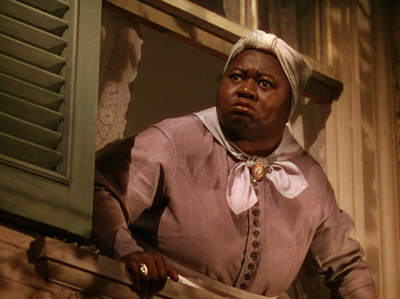
On May 10th 1940 Winston Churchill succeeded Neville Chamberlain as British Prime Minister, the Tokyo Olympics was cancelled and the 12th annual Oscar ceremony saw a new star in the making, one who paved way for many of her race to follow; Hattie McDaniel. Gone with the Wind was directed by David O’Selznick (Selzick International pictures) and starred Scarlett O’ Hara and Ashley Wilkes who play a historical romantic duo set against the backdrop of the American Civil war.  

Despite its two year delay, Selzinick’s film won the award for outstanding production. In the mix was Hattie McDaniel’s award for best supporting actress (the mammy) which was a significant achievement in itself because Hattie (left) was the first African America to win an Academy award. Accepting the award on February 29th 1940 Hattie was humbled; “Academy of Motion Picture Arts and Sciences, fellow members of the motion picture industry and honoured guests: This is one of the happiest moments of my life, and I want to thank each one of you who had a part in selecting me for one of their awards, for your kindness. It has made me feel very, very humble; and I shall always hold it as a beacon for anything that I may be able to do in the future. I sincerely hope I shall always be a credit to my race and to the motion picture industry. My heart is too full to tell you just how I feel, and may I say thank you and God bless you”.

Through-out the late 1930s and 1940s the Oscar award ceremony was consistent in its success and dedication toward onscreen recognition. In 1943 the Oscar awards introduced a new category of awards in honour of the pretentious work ethic of those who often go unnoticed; Best documentary feature (1943), Best Foreign language film (1947), Best costume design (1948) and best makeup and hairstyling (1981). In the mix was the celebration of best animated short, best visual effects and best sound mixing; most of these categories have withstood the test of time from the year 1940 right through to 2010. Such categories and more have gone on to boost the face of the Oscars and its recognition of celebrating every aspect of film craftsmanship. However not every category made it as far with some discontinued since the early 20s and late 60s. One such award is the best comedy picture which was strangely presented to a Lewis Milestone for “Two Arabian Knights”. Unfortunately, though the last movie you may have seen had you hurting with laughter, you will not see such gratitude in the awards today. In fact that award of 1929 was the first and last. Along with the extinguished is the award for best Dance direction (1935-1937), best original story (1928-1956) and best title writing (1928). An award for best title design was almost introduced back in 1999 but was later rejected).

That wonderful toy
There are many awards granted to those worthy, but not all of them come in the form of what we perceive to be an Oscar award, well to put it correctly, each statuette, no matter its design is an Oscar award per say. But, followed by the award for, let’s say the Academy Award for Technical Achievement, the John A. Bonner Medal of Commendation, the Student Academy Award and many more of that niche, the statuette in which signifies this event is The Academy Award of Merit; plated in copper, nickel silver and 24 karat gold, it stands tall and weighs approximately 8 ½ pound.  The appearance renders a knight holding a crusaders sword posing on a reel of film with five spokes attached. The five spokes represent the original branches of the academy which are the actors, directors, writers, producers and technicians; Pretty cool right?  So who the hell is Oscar? While the name of Oscar Wilde and many other fabricated but pretty nice philosophical related stories have circled in its time, Rebecca Murray of Hollywood Movie Entertainment has settled on one such story that the Academy has gone on to use; “the most popular story has been that Academy librarian - and eventual executive director - Margaret Herrick believed it looked a lot like her Uncle Oscar. After she made that observation, the Academy staff began calling the award 'Oscar.' The Academy didn't officially use the nickname until 1939”.

Pause for significance
Below are some notable millstones in the history of the Academy Awards.

14th Awards – In 1941, a documentary category appeared on the ballot for the first time.

20th Awards – The first special award to honor a foreign language motion picture was given in 1947 to the Italian film “Shoe-Shine.” Seven more special awards were presented before Foreign Language Film became an annual category in 1956.

21st Awards – Costume Design was added to the ballots for 1948.

25th Awards – For the first time, the Oscar presentation was televised. The NBC-TV and radio network carried the ceremony, honouring the films of 1952, live from Hollywood with Bob Hope as master of ceremonies, and from the NBC International Theatre in New York with Conrad Nagel as host.

29th Awards – The Jean Hersholt Humanitarian Award was established and Y. Frank Freeman was its first recipient.

36th Awards – The Special Effects Award was divided into Sound Effects and Special Visual Effects beginning with the honors for films released in 1963.

38th Awards – The Oscar ceremony in 1966 was the first to be televised in color.

41st Awards – The April 14, 1969, Oscar ceremony was the first major event held at the new Dorothy Chandler Pavilion of the Los Angeles County Music Center.

54th Awards – Makeup became an annual category, with Rick Baker winning for his work on the 1981 movie “An American Werewolf in London.” The Gordon E. Sawyer Award, recognizing technological contributions to the industry, was established.

74th Awards – The Animated Feature Film Award is added, with “Shrek” winning for 2001.

Media Intervention
The origin of the Oscar ceremony is of very little significance regarding publicity and advertisement. Far from what we see today, the Oscar ceremony was an intimate way of toasting to those representing the film industry and the future it long beholds. Unlike the drama and the significant glamour involved today, the first Oscar ceremony managed to stay hidden from the public eye. However the reception and coverage that followed would forever blow this little place of many characters into a global reception.  The privilege of being nominated and better yet, to win, was blown up by the little existing media of that time.  The second Academy Awards was significant in its enthusiasm and thirst of interest. And so, for the very first time the Oscar awards was broadcast on air for approximately one hour and of course going on to do so ever since. Do you think that mysterious broadcaster would have guessed the many ways we could watch the Oscars today?

In 1953, the first televised Academy Awards enabled millions through-out America and Canada to celebrate their favorite action star, tear-jerking love story, musical wonder and female protagonist, all from the comfort of their living room. Just like video tapes to DVDs, or cassettes to CDs, twas the dawn of the color television in 1966 that gave home audience an immersive interaction that would blow their socks off! A bit like the forceful concept of 3D today, the difference with the introduction of colour TV was that it actually worked, and we, as human beings have gone on to inherit nothing else since.

The Oscar award ceremony reached new heights in 1969 when it began broadcasting internationally in over 200 countries.


Saturday, 22 February 2014

Her


Genre: Drama
Directed: Spike Jonze
Starring: Joaquin Phoenix, Scarlett Johansson & Amy Adams
Running: 126 min

Spike Jonze has played a hand in directing a plethora of peculiar films most noticeably favoring the short film genre and proudly credited for the hilarious writing involved in the Jackass movies and Bad Grandpa of recent. With the Academy awards around the corner Spike Jonze's latest is a mellowed take on one man's relationship with his computer (to be frank). Nominated for best movie along with Dallas buyers Club, 12 years a slave etc. Her will be credited for its relevance in terms of technology with a sci-fi twist lingering in the background. Its beautiful surroundings are not forced upon, rather trusting the viewer to engage in its leading protagonist which proves both humorous and heartfelt.

Theodore (Joaquin Pheonix) has an attaching occupation in writing letters of lust, heartbreak and celebration to people around the world; which is ironic regarding his own troubles. Theodore is content in his social life and happy to play 3D video games in his spare time. Flashbacks of his previous relationship tells a different story, showing the hesitance in Theodore as his wife awaits his signature on the divorce papers. The metropolitan concept is quite surprising, leaving us to assume that Theodore's time on earth is certainly not modern. We see this in the premise of his job occupation, the design of his room, the video games, and more importantly, the OS1; the world's first artificial intelligent operating system. To suit that of his lifestyle and workload Theodore purchases the advanced application resulting in a relationship like no other.

Much to his surprise, OS1 is a conscience, so much so that her name is Samantha (Scarlett Johansson). Samantha seems like the hole missing in Theodore's lonely lifestyle and fulfills an emotional attachment that Theodore has been seeking to overcome, and does so by falling in love with Samantha.

While the plot may sound peculiar on paper, some will be surprised to find themselves adapting to Theodore's ambition to make this work, and work it does; as from there we see the bright side of Theodore who, for the first time in a long time is able to share the joys in life with Samantha who is occasionally taken on trips around the beautiful city. Samantha is so impressed with seeing the world through Theodore's pocket camera that she starts to develop a personal attachment to Theodore making "Her" even weirder, but funny and heartfelt as the story progresses.

Her does well in its focus on certain people in Theodore's life, who, just like him, are not happy in the life they lead. One of these is the wonderful Amy (Amy Adams) who's relationship with Charles (Matt Letscher) is far from steady, seeking friendly comfort in Theodore who have so much in common, however the OS1 trend is something that separates any potential lust. And that is what Spike Jonze does so good in highlighting the wave of technology to a point of unsociable engagement, highlighting the technological advancement that exists among modern society, crafting a love story between Theodore and his computer so legitimately that we don't question it. Although I will say that "Her" could have knocked thirty minutes off as it is a little dragged out to the point of feeling that its once sense of direction was at a loss.

Her is pretty much a one man show, therefore there are not many characters to discuss apart from Joaquin Phoenix who gives a great performance in what looks a simple film to be part of, but it is the camera angles that capture the various emotions from Phoenix and his ability express circumstances through his witty dialog and facial expressions. Her is a great movie that is not for everyone (unfortunately). Its concept is silly, but one must recognise the human emotions attached to such a story. The beautiful scenery has gotten more attention than the finished plot. It will not win best film and it is not unfortunate considering what it's up against.

Overall: A really enjoyable, beautifully original love story that offers some laughs. Joaquin Phoenix is the only reason to see it, and while the concept is not for everyone, the presence of Phoenix can not be missed, even if the movie is an unnecessary length.


Thursday, 6 February 2014

Robocop (2014)


Genre: Crime/Sci-fi
Directed: Jose Padilha
Starring: Joel Kinnaman, Gary Oldman, Samuel Jackson and Michael Keaton.
Running: 118 mins

At the hands of greedy Hollywood and lazy ideas, no movie is safe from being thrown into that big pile of remakes that cinemagoers know all too well. It is fair to say that modern directors in most cases, the up and coming, are the most gutsy when it comes to revisiting a cult classic such as Robcop. There are many reasons a director may pick up such a poisoned chalice but the legitimate reason is money. For fans of the original it is quite nonsensical but for the neutral and more importantly the younger demographic it is destined to find, it is clever and ultimately extremely rich. Way before remakes and Gothic robots was a time when director Paul Veroeven challenged James Cameron’s Terminator in 1987. Paul crafted his own futuristic tale of a dystopic Detroit bowing to the presence of a man in a machine who, considering the era and rating of the movie, it wouldn’t hesitate in blowing your head off – the violence was ripe and that is what signified 80′s cinema.

Twenty seven years down the line Jose Padilha directs a Robocop movie that is clearly modernised to suit the criteria of 21st century blockbuster; it’s visually teasing, not very action packed but sticking with the original plot respectively.

The year is 2028 and technological conglomerate Ominicorp is fighting for robotic protection on the streets of Detroit. At the centre of this debate is Raymond Sellars (Michael Keaton). Having inherited billions from his military robots overseas, for Raymond, America’s fight against such prospect is a hard pill to swallow. He is hell-bent on altering a machine based authority that citizens can look up to with trust and support. We are consistently reminded of the need for such placement through Pat Novak (Samuel Jackson) who asks the question; “Why is America so Robophobic”? This is supposed to create a giggle or two.

On the other side of the not-so gritty city is our protagonist Alex Murphy (Joel Kinnamen). Murphy is a family man and a respected cop. Unfortunately for Murphy his eagerness to put certain criminals behind bars results in a car bomb which explodes at close range. Shattered and burned to a crisp, the decision of Murphy’s last breath is down to his distraught wife Clara (Abbie Cornish). She is given a life changing decision by Omincorp; seek benefit in society by creating a robotic hero, or let Murphy die a hero’s death. Thanks to Dr. Dennett Norton (Gary Oldman) Raymond Sellar’s vision for a safer city pays off as Murphy awakens inside robotic armour.

This is a remake with little evidence as to why the city of Detroit is so ridden with scum that it needs such authority. I mean Detroit has never looked so clean. It is weak in its story, lacking any such motive as to why the town needs a saviour. It depends on the monologue from Samuel Jackson’s Pat Novak to keep you informed and to remind you why America needs this and how pro-American his own status is. Pat Novak, like Tom Pope (Jay Bruchel) and the arrogant Rick Mattox (Jackie Earl Haley) are the comedic twist to this drunken CGI fest. For instance Rick, who continues to call Murphy Tinman, plays the Wizard of Oz favourite “If I only had a heart” over a training montage.

Joel Kinnamen as Robocop can do no wrong. The scenes which show him interacting with his family are almost sympathetic. Murphy is aware of his new body from the second he awakens which opens the door for some quality time as Robodad. I cannot help but be appalled as to why Robocop’s suit is black? And what felt more ironic is that a former Batman requested it! We are teased from the beginning with the vintage metal outlook but hey, as a remake is the poison chalice, if you steer too close to the original or too far, you’re criticised. So yes, Robocop’s transformation to gothicbot should be criticised. He looks and moves more like the robotic ninjas from Robocop 3.

The overall movie is lethargic and timid with its characters. This underwhelming story involves more crocodile tears than The Notebook. It bleeds us dry with attempted emotion forgetting the purpose of the franchise; it lacks the action necessary to support its title and very little can be said for Joel Kinneman other than he played a robot. But hey, it is better than Robocop 3

Nitpicking aside, Robocop is entertaining in parts with a little bit of nostalgia. It lacked the necessary action that the original gave us, along with the grit and the memorable villain. I enjoyed the last 15 minutes, not because it ended, but because Robocop finally grows a pair of metal ones!


Street punk Luthor and potential movie plot?


According to IGN and some, the upcoming and yet so far Superman/Batman movie will take Jesse Eisenberg's Lex Luthor back to its origin; a tattooed street punk with intelligence. The intelligent part we know about, but the inked up lunatic? The prospect of a dark modernised mastermind sounds appealing. 

The video also touches on the Chinese whispers surrounding the potential plot. 


Head over to ComicBook.com for more information and expectation regarding Zack Snyder's anticipated return to metropolis.